
Growing Food, Skills and Community: An askîy intern reflection
One of our askîy interns reflects on her time working with us over the summer.
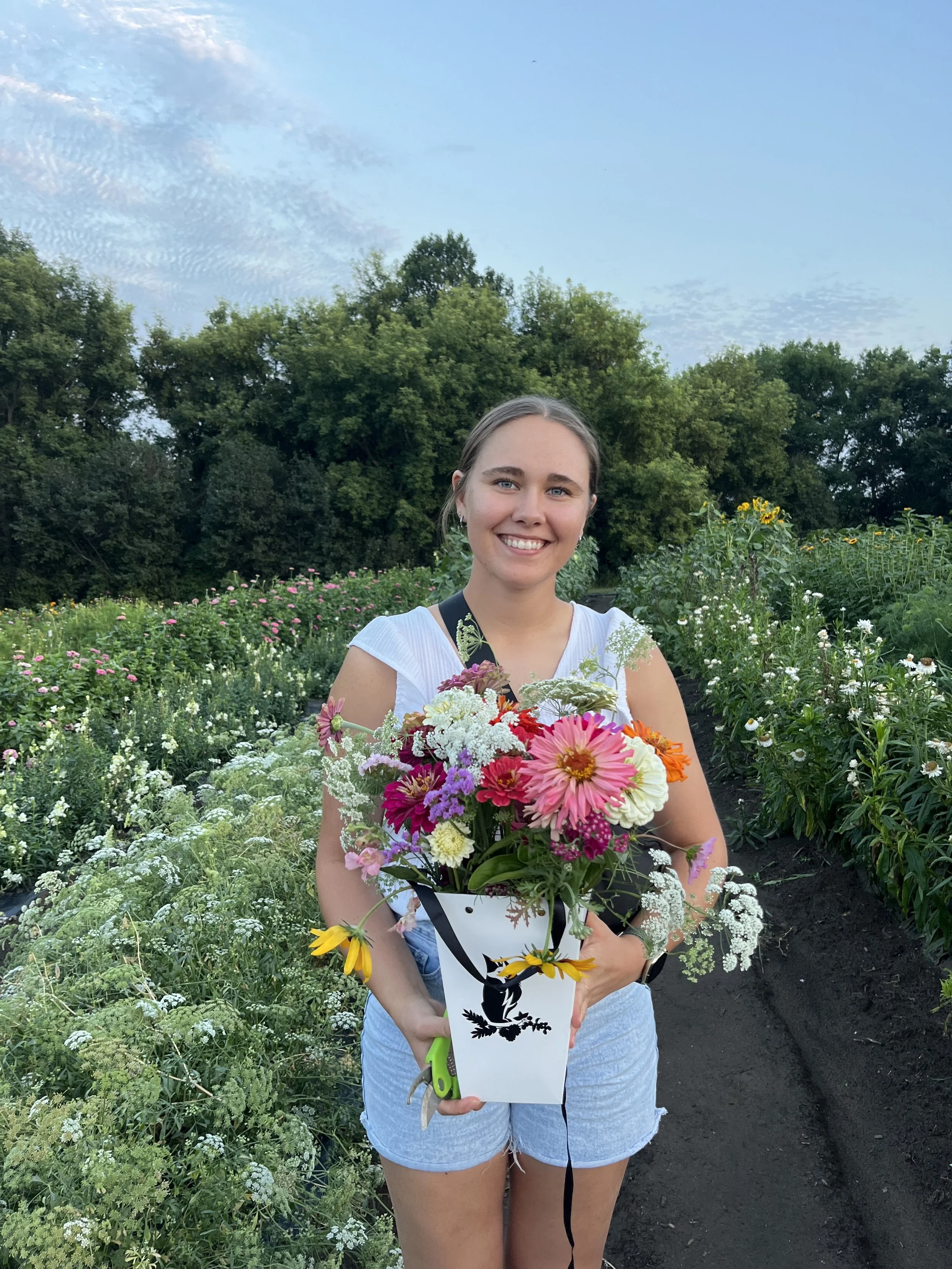
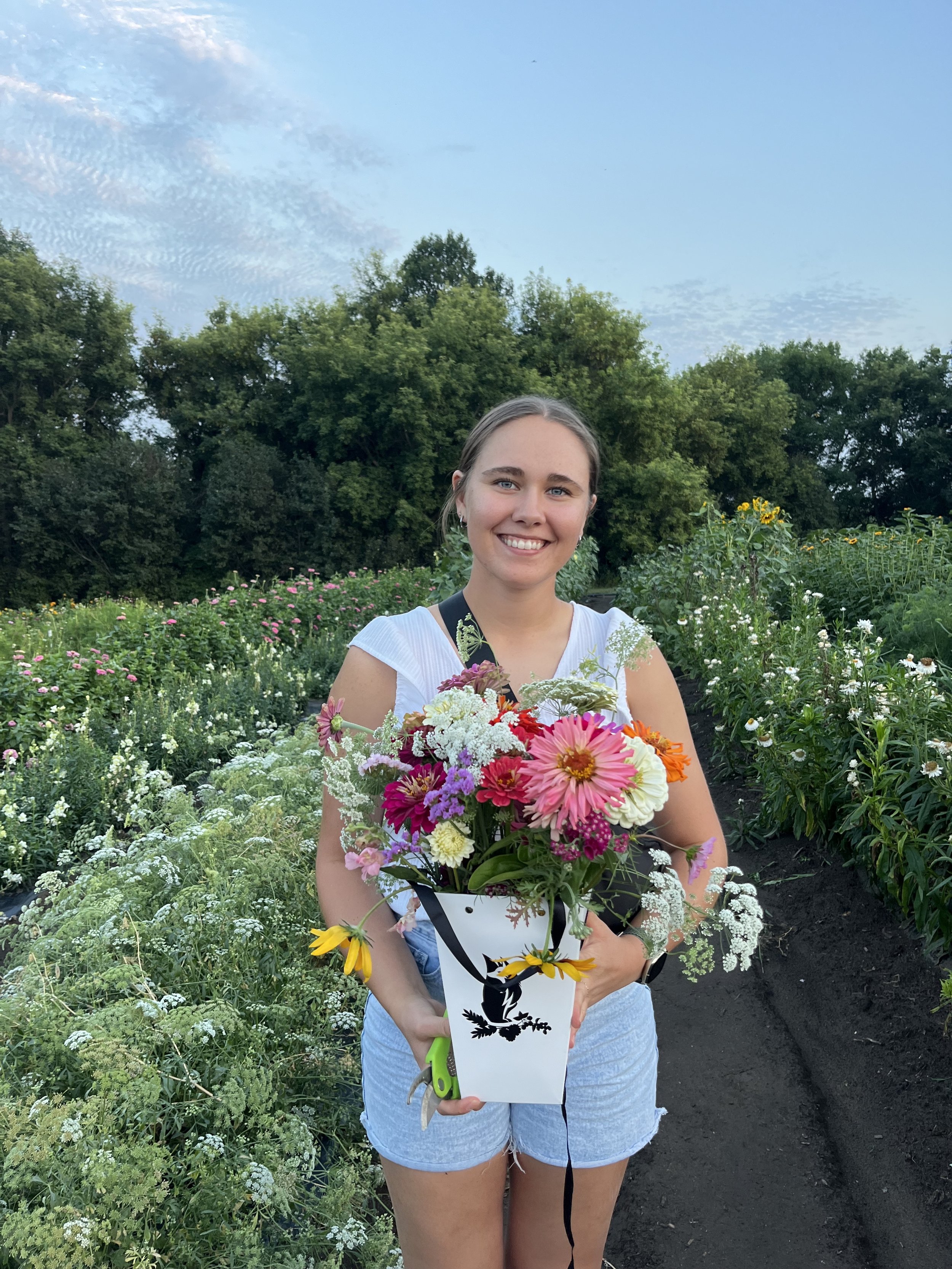
My favourite aspect of this internship has been watching the plants grow and develop. What started out as little plants that were easy to overlook became something that flourished and produced abundantly. Throughout the summer, I learned a lot and developed many practical skills that relate not only to gardening, but also to real life.
My passion project for the summer was composting using worms, also known as vermicomposting. It was really cool to see the food I put in eventually break down into nutrient-rich soil. Not only that but taking care of something living gave me a sense of purpose. In a way, they felt like my little babies.
I expected to see lots of bugs when working in a garden, and I certainly wasn’t disappointed. One of the most memorable moments was while I was watering, a ladybug landed on my hand. After crawling around for a little while, it eventually settled onto my thumb and stayed there for a couple minutes, content to just sit and rest. I was so cautious about not moving because I didn’t want to scare it off. Eventually, it went on its way. The cutest thing I encountered, though, had to be a sleeping bee on a flower. Both bugs reminded me that through busy seasons we need rest as well.
Not only did we watch the plants grow, but we also got to see how they were shared within the community. Each week we harvested flowers and made beautiful bouquets to sell. But it was the purpose behind them that I was really proud to be a part of. The proceeds from the flowers go towards the Pay It Forward program, which made it feel that much more impactful. We created beautiful things for an important cause.
I took so much time appreciating the beautiful things in the garden, and I think that is something that can be applied to life as well. There is so much happening around us, but sometimes we need to slow down and appreciate the little things, the things that grow, the things we care for, and the beautiful things we get to share with others.
Learning and Connecting at School Food for All: Nourishing Futures
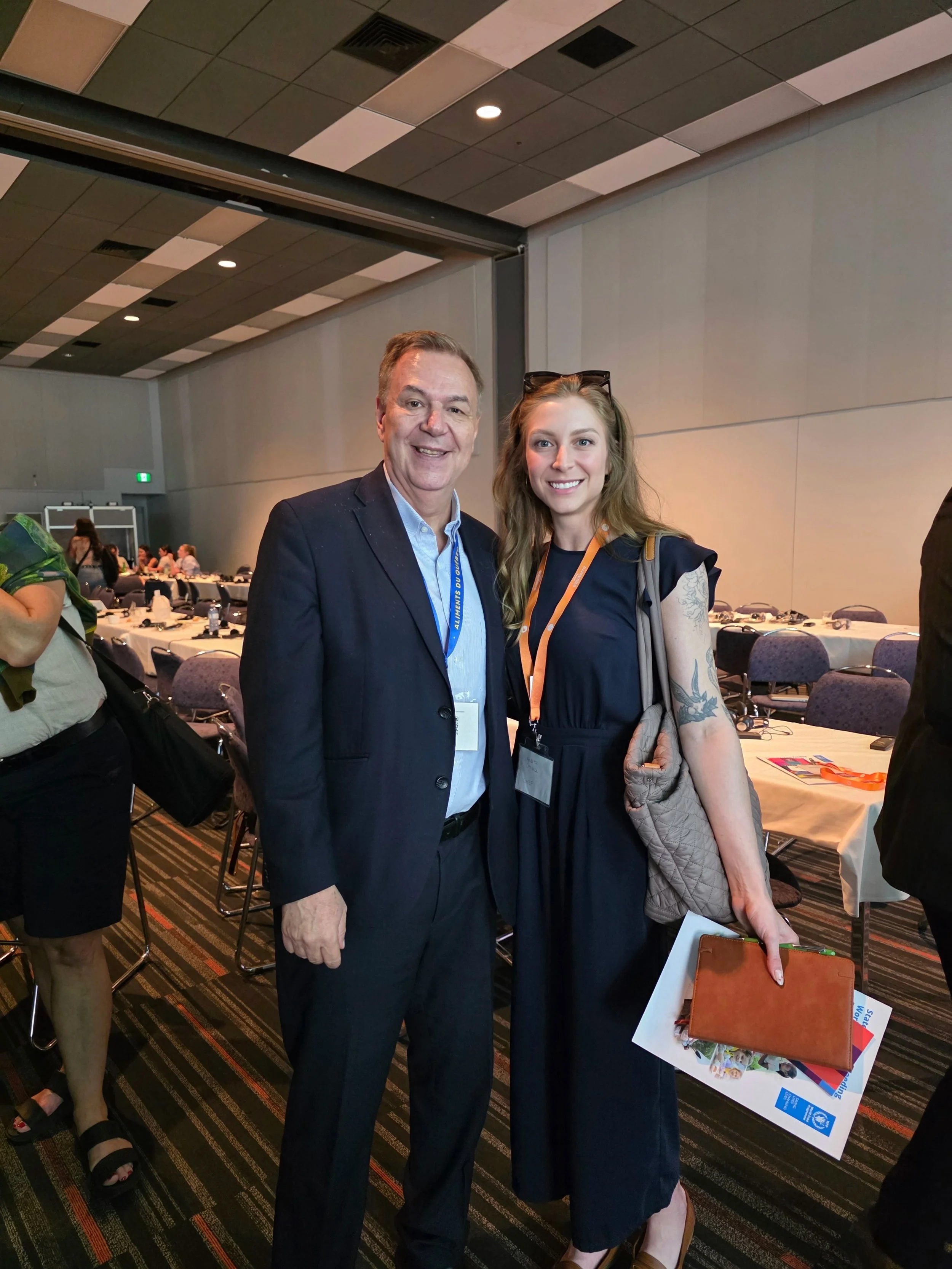
In June, CHEP Good Food Executive Director Andrea Cessna attended School Food for All: Nourishing Futures in Montreal, a national gathering that brought together more than 530 participants for 68 sessions over three days focused on the future of school food in Canada.
In June, CHEP Good Food Executive Director Andrea Cessna attended School Food for All: Nourishing Futures in Montreal, a national gathering that brought together more than 530 participants for 68 sessions over three days focused on the future of school food in Canada.
The gathering began with a field trip through Quebec’s Montérégie and Estrie regions, where participants visited three community food initiatives connected to La Cantine pour tous’ network of social economy caterers. The visits offered a chance to see different approaches to preparing and delivering school food while connecting that work to local communities and food systems.
Throughout the forum, discussions explored school food from many perspectives, including food literacy, local food systems, research, sustainability, and the implementation of Canada’s National School Food Program.
Saskatoon was well represented. Jordan Sokmenoglu of Saskatoon Public Schools presented on Embedding Food Literacy in School Food Programming, sharing work already underway as well as plans for expanded food literacy, land based learning, farm and facility tours, and greater integration between food production and learning.
University of Saskatchewan researcher Dr. Rachel Engler Stringer also presented A Vision for Community Engaged School Food Research Over the Next 30 Years, looking toward a future where school food is fully integrated into the school day and supported by research developed in partnership with communities.
One presentation that particularly resonated with CHEP came from Daniel Balaban of the World Food Programme Centre of Excellence against Hunger in Brazil. Drawing on international experience, Balaban emphasized that sustainable school food systems are built over time by strengthening existing initiatives, aligning stakeholders, improving collaboration across sectors, and creating the predictability needed for long term planning.
His closing message emphasized that it is possible to move from many individual initiatives toward a more coherent collective effort, with different organizations and sectors each having a role to play.
These ideas are particularly relevant as CHEP considers how its decades of experience in school food, food literacy, community programming, and food access can contribute to the next chapter of school food in Saskatoon and Saskatchewan.
Thank you to the Coalition for Healthy School Food for providing a bursary that made CHEP’s participation in School Food for All: Nourishing Futures possible.